A Definition
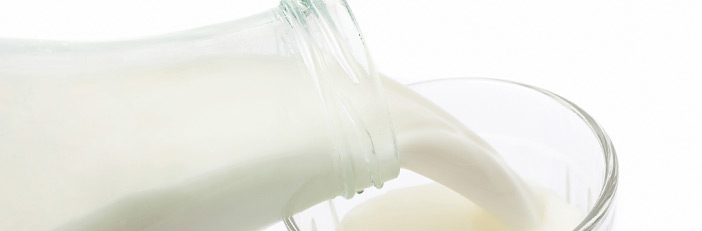
Buttermilk is the low-fat portion of milk or cream remaining after it has been churned to make butter. Today, buttermilk is not a byproduct of butter-making, but is made from nonfat or low-fat milk that is “cultured” with lactic acid bacteria. Cultured buttermilk is low in fat and calories, but maintains its traditional tangy flavor and creamy texture.
The Facts
Buttermilk was originally produced while making butter. The milk would often be slightly soured by naturally occurring bacteria before and during churning, giving the remaining butter-flecked liquid a rich, tangy flavor that was naturally full of nutrients. Rather than discard the buttermilk, dairy farms used it for drinking, leavening bread and for baked goods. The acid in buttermilk creates a rich, tangy flavor and tender crumb that is often preferred to commercial baking powder by many bakers today.
The Process
Buttermilk is made from pasteurized nonfat or low-fat milk to which a culture of Streptococcus lactis is added in order to produce acid that thickens and flavors the buttermilk. A culture of Leuconostoc citrovorum can be added to enhance the butter flavor (diacetyl). Butter flakes, salt or citric acid may also be added for flavor. Most buttermilk in the market contains 1or 2 percent milkfat or the same fat content as the milk from which it is made.
Storage and Handling
- Store buttermilk in its closed container in the refrigerator, which is typically set at 38˚F-40˚F.
- Buttermilk containers are stamped with a “sell by” date, which refers to how long the retail store can keep the product for sale on the shelf.
- Buttermilk can separate as it sits, so shake well before using.
Nutrition
Although buttermilk’s rich-sounding name and creamy texture suggest a high fat content, buttermilk is surprisingly low in fat and calories.
| Nutrient Content of Buttermilk (per 1-cup serving)* | |||||||
|---|---|---|---|---|---|---|---|
| Calories | Milkfat (g) |
Protein (g) |
Carbohydrates (g) |
Calcium (mg) |
Riboflavin (mg) |
Cholesterol (mg) |
|
| Low-fat (1% fat) cultured |
98 | 2 | 8 | 12 | 284 | 0.4 | 10 |
* Nutrient Data Laboratory Home Page, http://www.nal.usda.gov/fnic/foodcomp
Cooking with Buttermilk
The acid in buttermilk, when combined with baking soda, produces light baked goods and adds extra tenderness, moisture and flavor. This acid also acts as a tenderizer when combined with seasonings in marinades for meat and poultry. Buttermilk adds low-fat creaminess and flavor to soups, salad dressings and sauces and can be substituted for yogurt or mayonnaise in some recipes. Buttermilk is an essential ingredient for Southern favorites such as buttermilk biscuits, buttermilk pie and Southern cornbread. Because of its low fat and high protein content, buttermilk can curdle when heated to near boiling. When using in hot food, add the buttermilk as late as possible during preparation, heat gradually and stir gently.
Glossary of Terms
Cultured Buttermilk is made by fermenting nonfat or low-fat milk with lactic acid bacteria. Bulgarian buttermilk is a version of cultured buttermilk in which the cream cultures are supplemented or replaced by yogurt cultures and fermented at higher temperatures for higher acidity. It can be more tart and thicker than cultured buttermilk.
Powdered Buttermilk or “dry buttermilk” is buttermilk from which all the moisture has been removed. It is generally used for baking and if stored unopened, can be kept in a cool, dry place for up to 6 months. Refrigerating opened packages will retain freshness.
Sources
California Department of Food and Agriculture
Herbst, Sharon Tyler. Food Lover’s Companion, Third Edition. New York: Barron’s, 2001
McGee, Harold. On Food and Cooking. New York: Scribner, 2005
National Dairy Council